The Tanzania Nobody Talks About
When people think Tanzania, they think Serengeti. They think Ngorongoro Crater, Zanzibar beaches, the Great Migration. These are extraordinary places — but they are also, in the age of social media, extraordinarily busy. What fewer people know is that northern Tanzania has a second, quieter story: hidden hot springs, coffee-farm waterfalls, Maasai highland walks, and a perfect volcanic lake that sits at the foot of Kilimanjaro in near-total obscurity.
This is that story.
Kikuletwa Hot Springs: Africa's Secret Swimming Hole
Kikuletwa — also known as Chemka Hot Springs — is reached via a dirt track cutting through flat, semi-arid scrubland about 60 kilometres west of Moshi. Nothing in the landscape prepares you for what you find: a shaded oasis of crystalline warm water, its banks lined with ancient fig trees whose roots plunge directly into the spring. The water temperature hovers around a perfect 32°C, clear enough to see the bottom several metres down.
Locals have swum here for generations. Rope swings hang from the fig tree branches. Fish circle your feet as you float. It is one of those places that feels like it exists slightly outside of real time — quiet, warm, impossibly green against the dusty acacia bush that surrounds it.
"You arrive expecting a roadside attraction. You leave wondering whether to tell anyone about it at all."
Arrive early morning to have the springs almost to yourself before day-trippers come from Arusha and Moshi. Bring a picnic. Stay longer than you planned.
Materuni Waterfalls & the Coffee Tour
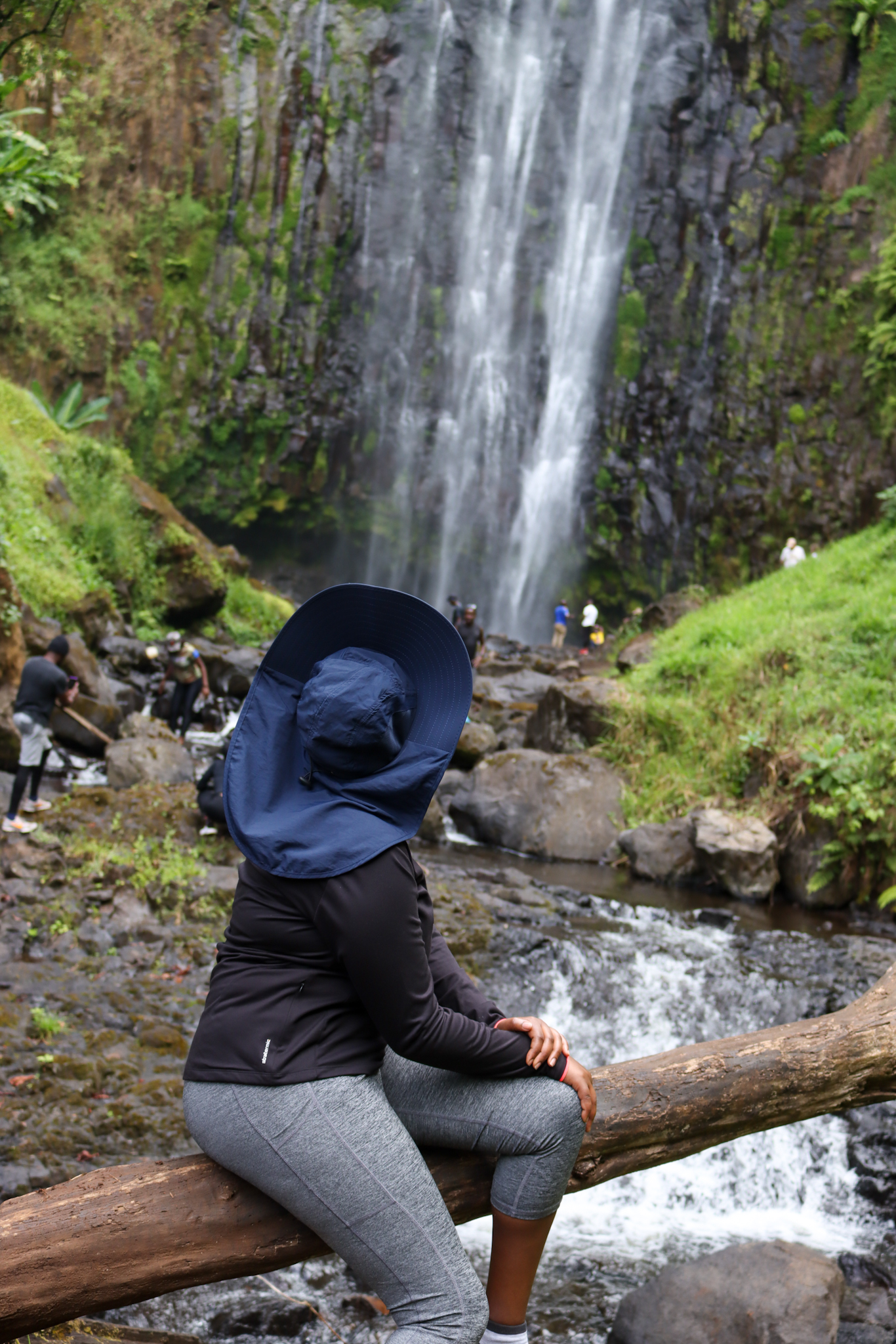
On the southern slopes of Kilimanjaro, above the town of Moshi, the Chagga people have grown coffee for generations. Materuni village sits at around 1,800 metres — high enough that the air is cool and vegetation thick — and a hike through the coffee shambas to the Materuni Waterfalls is one of the most underrated activities in Tanzania.
The trail winds through smallholder farms where Arabica coffee grows beneath banana trees, and local guides stop to explain each stage of coffee production — from picking the bright red cherries to pulping, fermenting, drying, roasting, and grinding by hand in a wooden mortar. The cup of coffee you drink at the waterfall, prepared using beans you just watched being processed, tastes like nothing you have ever had before.
The waterfall itself — a cascade of about 70 metres dropping into a natural pool — is a suitable reward for the climb. Swim in the pool, eat your packed lunch, and let the sound of the falls fill the silence.
Mount Longido: The Maasai Sacred Mountain
Across the border from Kenya's Namanga, in a flat expanse of dry Maasai pasturelands, a single granite mountain rises from the plain like a giant's table. Mount Longido reaches 2,637 metres and has been sacred to the Maasai for as long as memory extends. The hike to the summit takes four to five hours, and most operators arrange for a Maasai guide from the village at the base.
The trail climbs steeply through patches of montane forest — surprisingly green given the aridity below — and on clear mornings, Kilimanjaro's snow-capped summit is visible to the southeast. The summit itself offers a 360-degree panorama across the Rift Valley into Kenya, over the Amboseli plains, and back toward Arusha National Park.
The village at Longido has developed a small cultural tourism programme — watching the bead market, speaking with elders, witnessing the weekly cattle auction — as interesting as the mountain itself.
Lake Duluti: Kilimanjaro's Volcanic Mirror
Tucked inside a deep forest crater just outside Arusha, Lake Duluti is one of Tanzania's hidden natural jewels. The crater was formed by volcanic activity, and the lake that fills it is ringed by dense indigenous forest — home to colobus monkeys, blue monkeys, kingfishers, fish eagles, and over 130 other bird species.
The best way to experience Lake Duluti is by canoe. Local guides paddle you slowly around the perimeter, pointing out birds in the overhanging trees and fish in the shallows. On clear days, Kilimanjaro's summit floats above the treeline to the north, reflected perfectly in the dark water below.
How to Do This Trip
Base: Moshi or Arusha — both well-connected by road to all four destinations
Time needed: A minimum of 3 days; 4–5 days allows a relaxed pace
Best season: June–October for clearest skies and best road conditions
Getting around: Hire a private driver or join a small-group tour for efficiency
A Different Kind of Tanzania
This circuit does not have the dramatic wildlife counts of the Serengeti, the famous skyline of Ngorongoro, or the beach bars of Zanzibar. What it has is something increasingly rare in East African tourism: intimacy. You share Kikuletwa with locals. Your Materuni guide is from the village. Your Longido guide's father climbed this mountain before him. These are not experiences designed for tourists. They are real places, graciously shared.
That, in the end, is the best kind of travel there is.